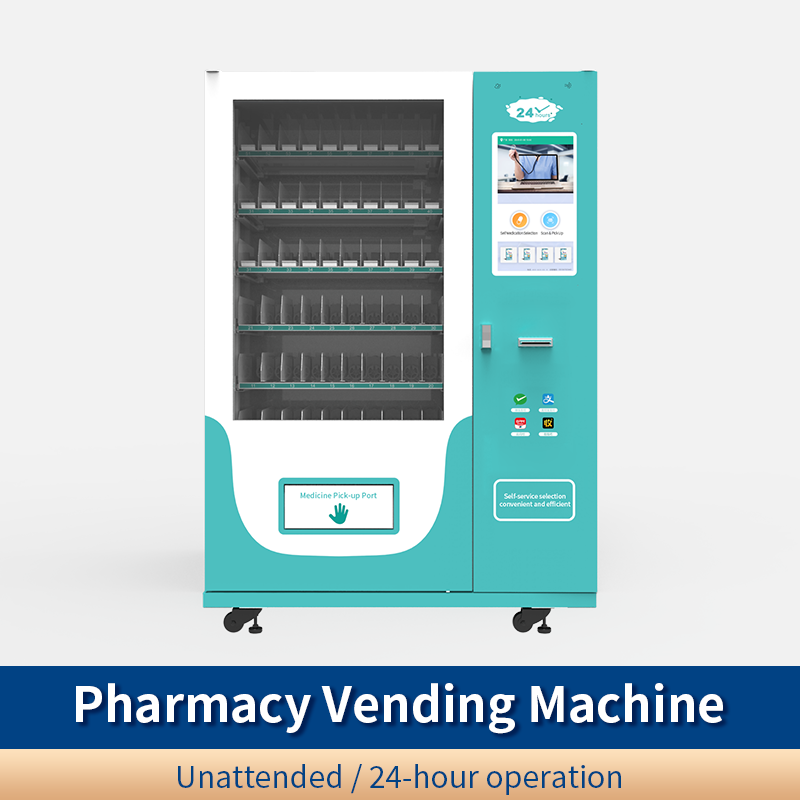
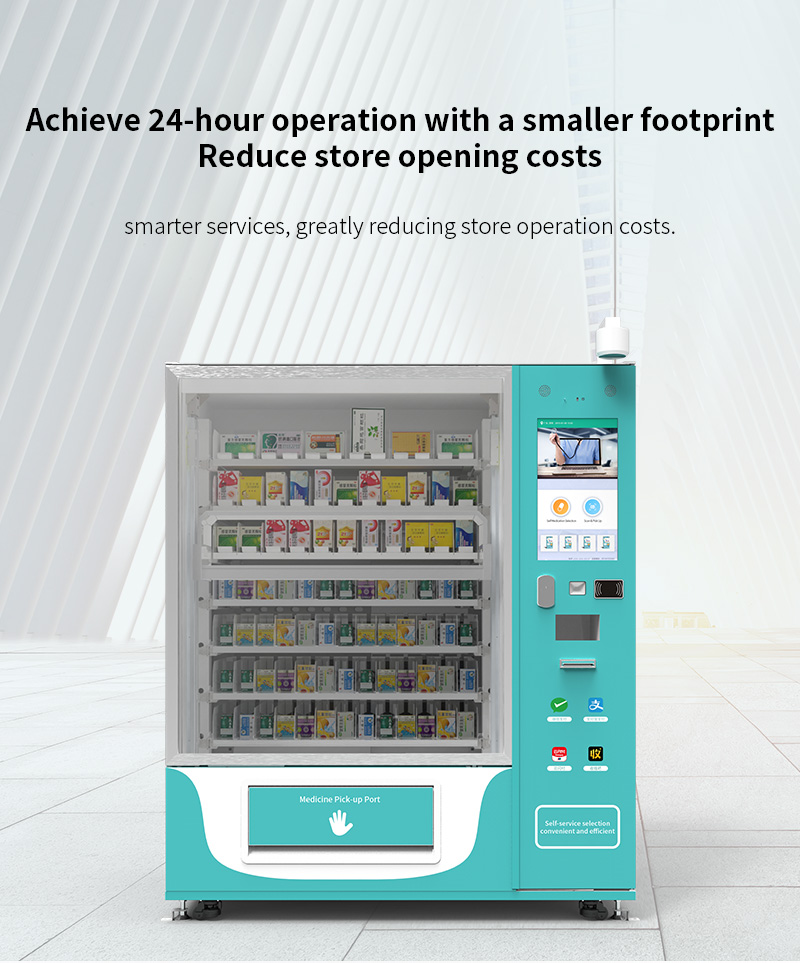
The self-service medicine vending machine is an intelligent terminal that conveniently sells common medications. Its core advantages are briefly summarized below, combining convenience, safety and practicality:
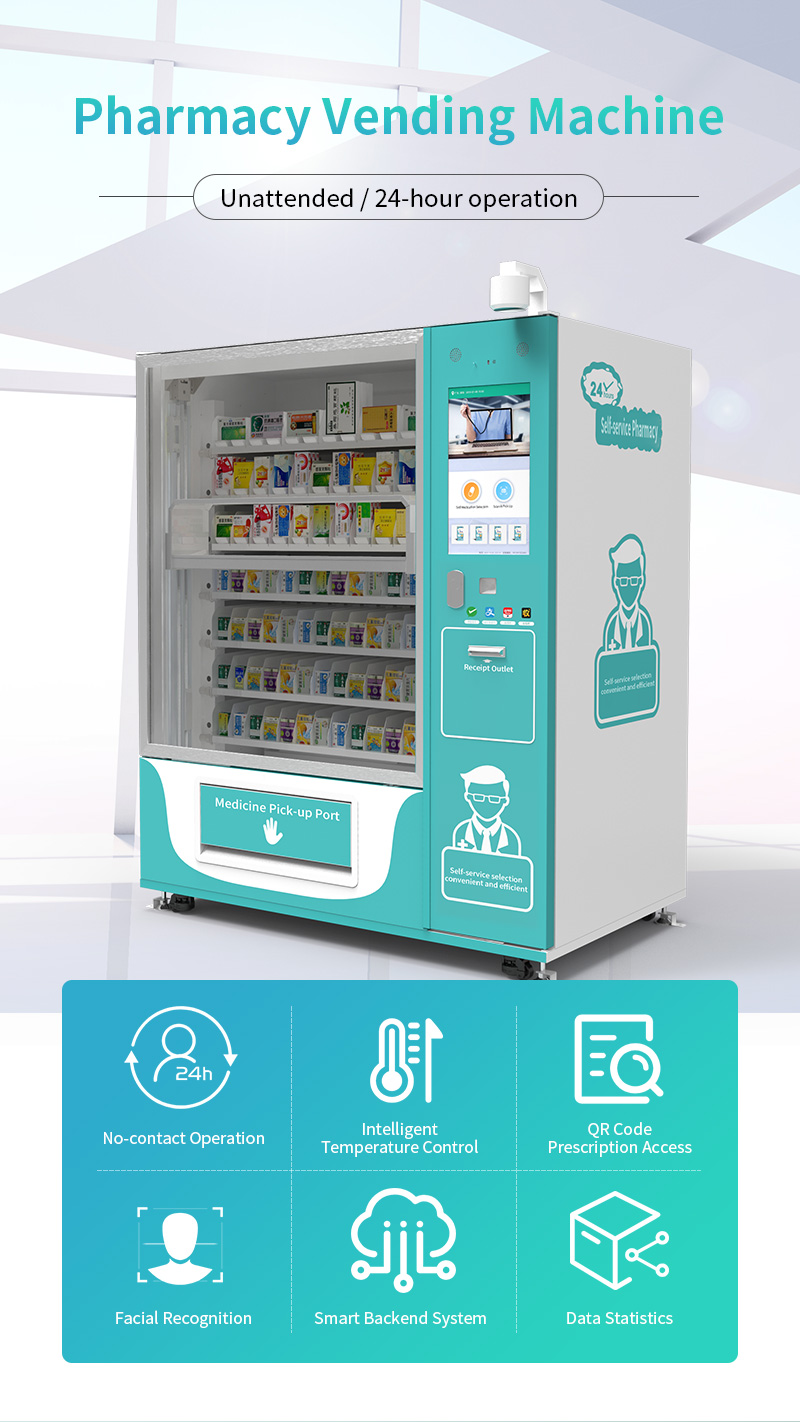
- **Convenient purchase**: 24/7 self-service operation without manual staff. Supports payment via QR code, card or facial recognition with fast pickup, solving the pain point of purchasing medicine late at night or outside business hours.
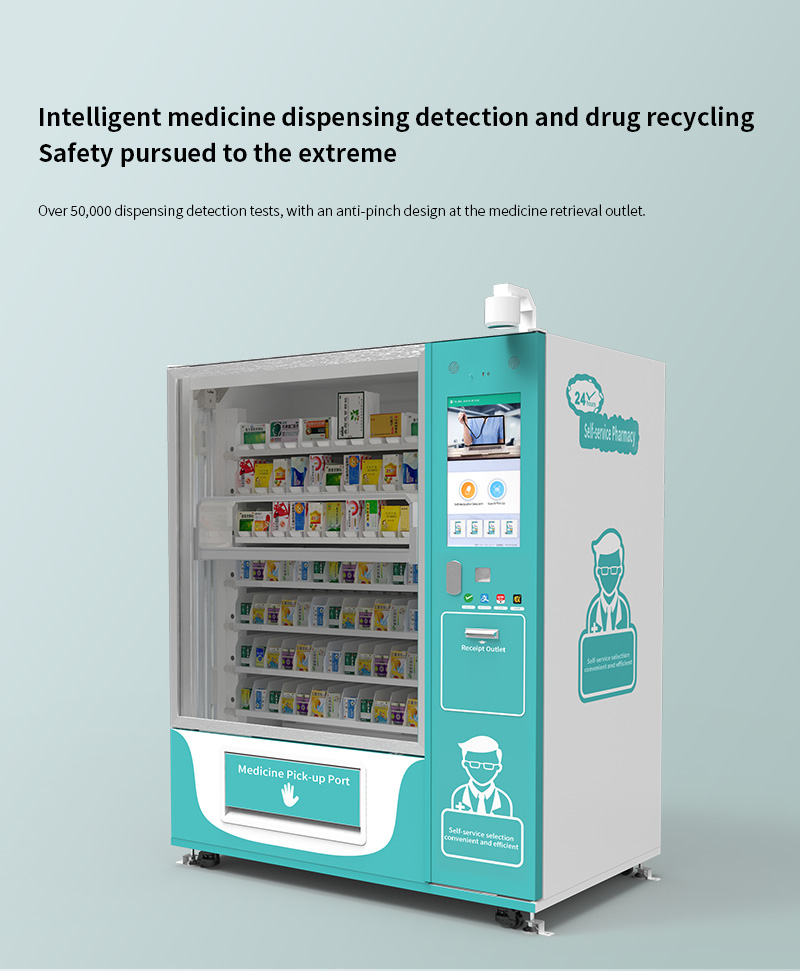
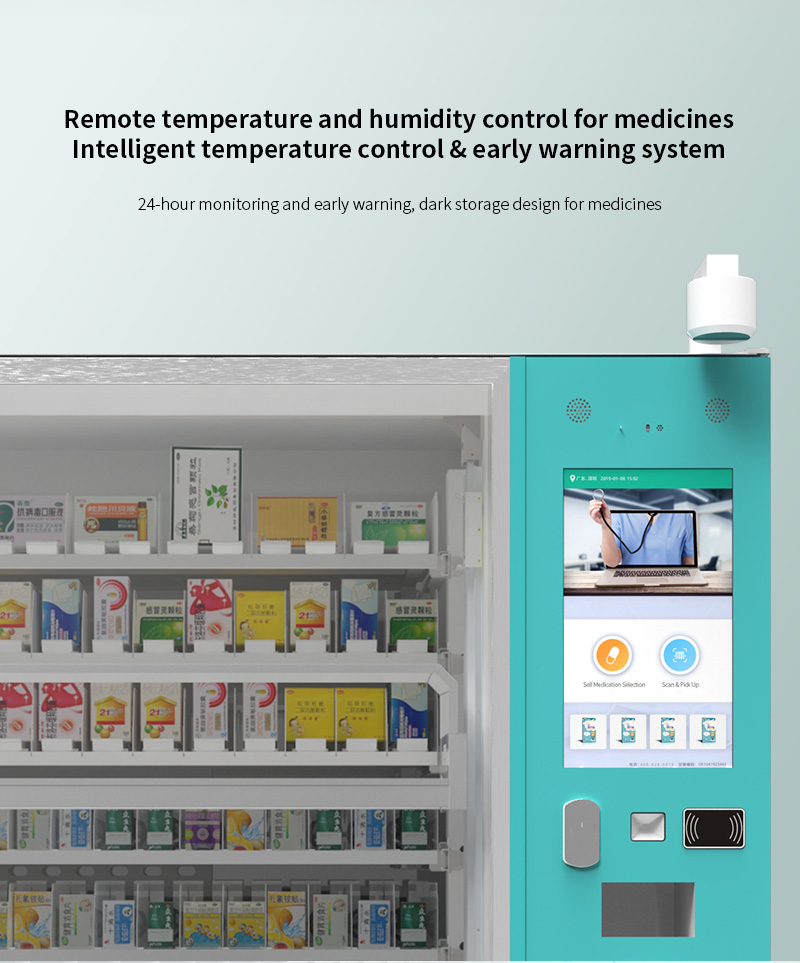
- **Medication safety**: Built-in constant temperature and fresh-keeping system suitable for storing medicines requiring refrigeration. Fully sealed management prevents contamination and deterioration, ensuring safe medication.
- **Suitable product categories**: Mainly provides common medicines, emergency drugs, healthcare products, etc., with clear classification and labeled usage and dosage to meet daily emergency and routine medical needs.
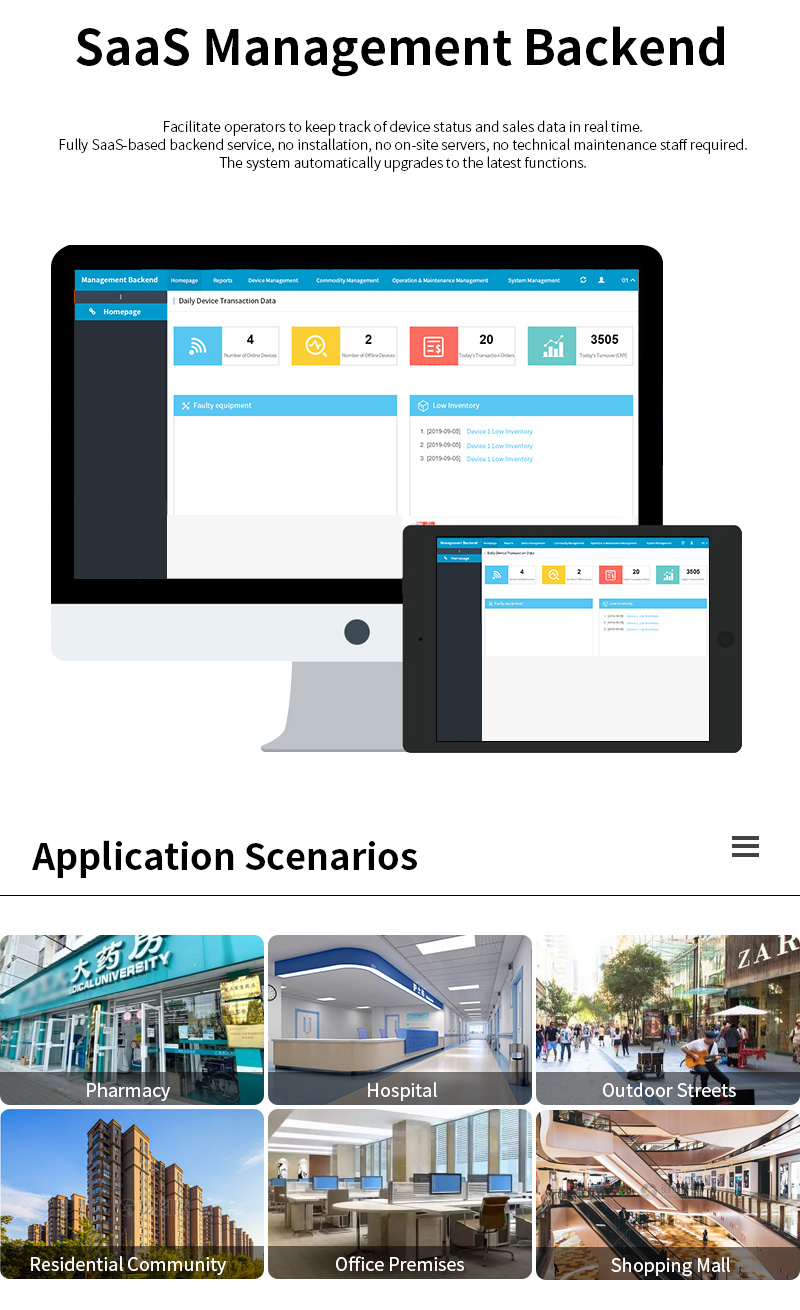
- **Hassle-free management**: Remote background control, real-time inventory and sales data monitoring, one-click restock reminders, and precise control of medicine expiration dates, reducing operating costs.
- **Wide scenario adaptability**: Suitable for hospitals, communities, stations, office buildings, scenic spots and other places with flexible deployment, allowing users to buy medicine nearby conveniently.
Automatic Medicine Vending Machine FAQ
1. What types of medicines can the medicine vending machine sell?
Mainly sells over-the-counter (OTC) drugs, health products, and medical consumables (masks, band-aids, disinfection supplies). It does not sell prescription drugs, cold-chain medicines, precursor chemicals, or psychotropic drugs, complying with national drug retail regulations.
2. Do I need to provide identity information when purchasing medicines?
No additional identity information is required for ordinary OTC drugs; scan the code to select products and complete payment to pick up medicines. Customized ID card scanning verification can be added, with purchase records automatically saved.
3. How to ensure the validity period of medicines in the vending machine?
The backend system supports medicine expiry warning; medicines are automatically removed from shelves and staff are reminded to restock when approaching expiry. Staff regularly check and clean expired/damaged medicines to ensure valid and qualified products.
4. What protective measures are available for outdoor-installed medicine vending machines?
Outdoor models have IP54 or higher waterproof and dustproof rating, with thickened cold-rolled steel plate + electrostatic spraying for corrosion resistance and aging resistance. Built-in constant temperature module controls internal temperature at 5-25℃ to prevent medicine deterioration from high temperature and humidity. Equipped with anti-theft locks and anti-prying alarms to ensure equipment and medicine safety.
5. What payment methods are supported by the medicine vending machine?
Supports WeChat/Alipay code-scanning payment, docking with local medical insurance systems for payment via electronic/physical medical insurance cards. Card swiping payment is also supported to adapt to different users.
6. What functions can the backend management system of the medicine vending machine realize?
Real-time monitoring of medicine inventory, equipment status, transaction records; supports inventory warning, expiry management, report export. Remote price adjustment, product on/off shelf, fault alarm viewing for unattended refined management.
7. What conditions are required for installing a medicine vending machine?
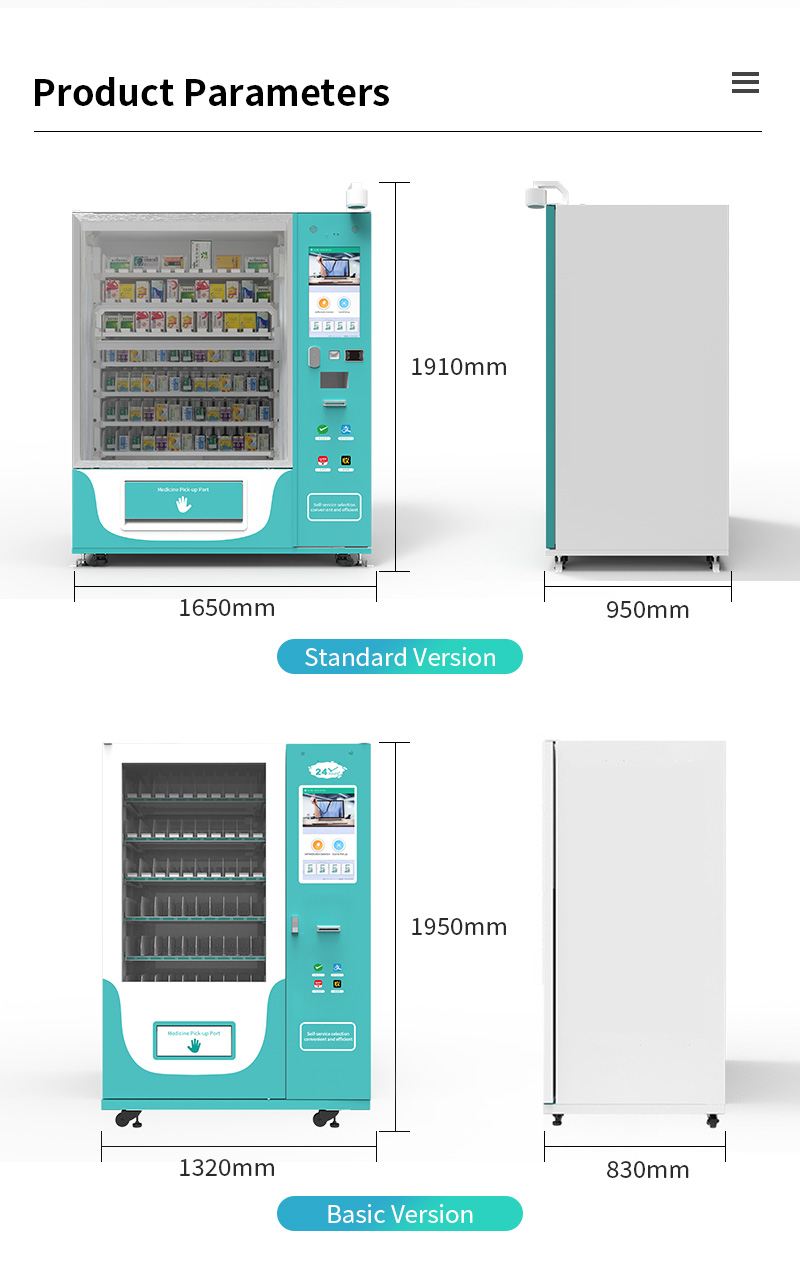
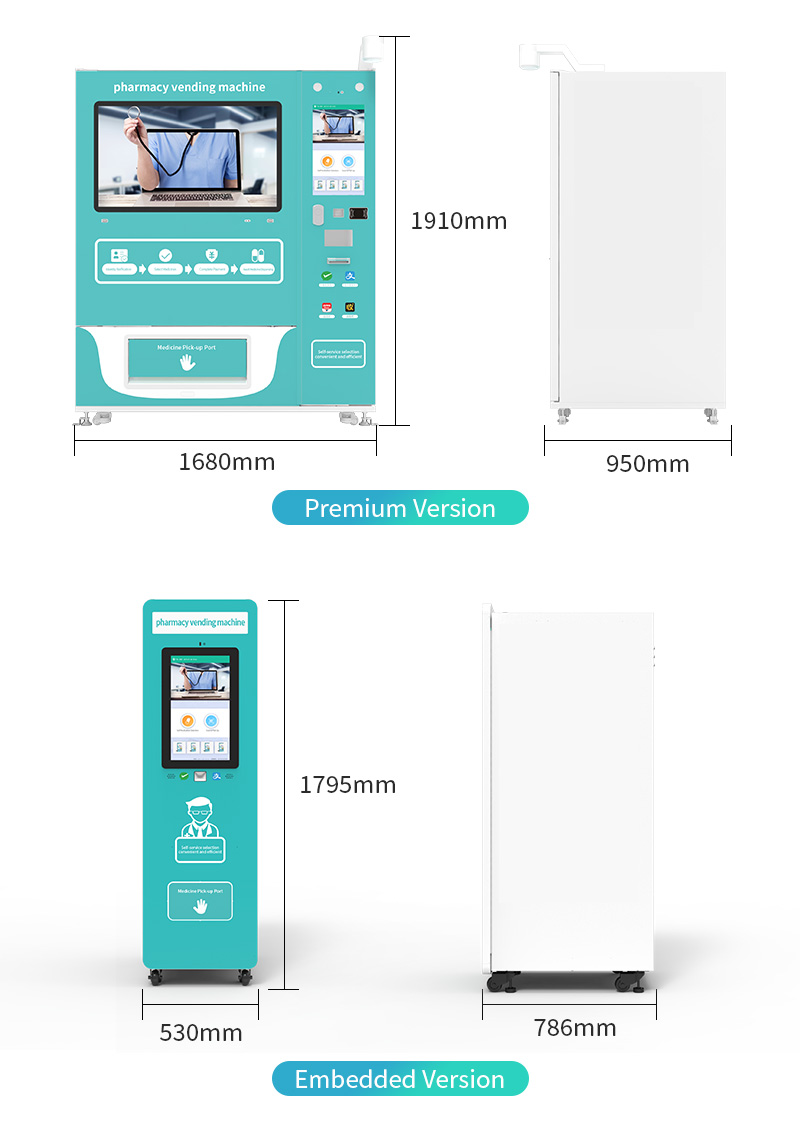
Stable 220V mains electricity, wired/4G network, flat ground; avoid water accumulation and direct sunlight for outdoor installation. Conventional models cover ≤1.5㎡, easy to install and debug in 1-2 hours.
8. What is the warranty period of the medicine vending machine?
1-year whole machine warranty, renewable, with lifelong after-sales service, remote technical support and mail-in repair services.
9. Can different types of medicines be customized for sale?
Yes, medicine types and specifications can be flexibly matched according to scenarios (communities, business districts, hospitals). Communities focus on common OTC drugs and consumables; hospital surroundings focus on postoperative care drugs and health products. Customized delivery methods for different products are available.